


News
The Differences Between Commercial and Industrial Energy Storage

The Differences Between Commercial and Industrial Energy Storage
Energy storage is a crucial technology for powering businesses more efficiently and supporting sustainability goals.industrial energy storage But with several different solutions available, it can be challenging for facility managers, energy consultants, and business owners to determine which solution best fits their specific needs. This article explores the key differences between commercial and industrial energy storage (commonly referred to as C&I).
Industrial facilities require more robust systems that can handle large-scale electrical demands and operate in remote or off-grid environments.industrial energy storage To meet this requirement, industrial ESS is designed to deliver increased reliability, efficiency, and resiliency in power supply. This reduces downtime risks, enhances operational productivity, and helps companies avoid costly power-supply outages. Industrial ESS also works well with renewable energy sources, allowing businesses to maximize their solar investments, further reducing their reliance on the grid and potentially achieving energy independence.
Like residential batteries, industrial batteries can help businesses save money by storing electricity during low-demand times and releasing it during peak usage.industrial energy storage They can also improve the profitability of renewable energy installations by enabling load shifting and peak shaving. Additionally, battery storage can support ancillary services such as frequency regulation and voltage support for utilities.
Unlike commercial storage, industrial storage systems must meet more rigorous technical requirements, including a high safety standard and the ability to operate in harsh environments.industrial energy storage This requires the use of more advanced or heavy-duty technologies such as flow batteries and large-scale lithium-ion systems. It is also important that the ESS integrates seamlessly with the existing electricity infrastructure and has the right level of flexibility for future expansions.
To maximize the value of industrial ESS, it is essential to implement a sophisticated energy management system (EMS). This allows the business to monitor and analyze their energy consumption, optimize operations, and respond to changing grid conditions and market signals. In addition, EMS enables the business to participate in demand response programs, further lowering their energy costs and contributing to grid stability and sustainability.
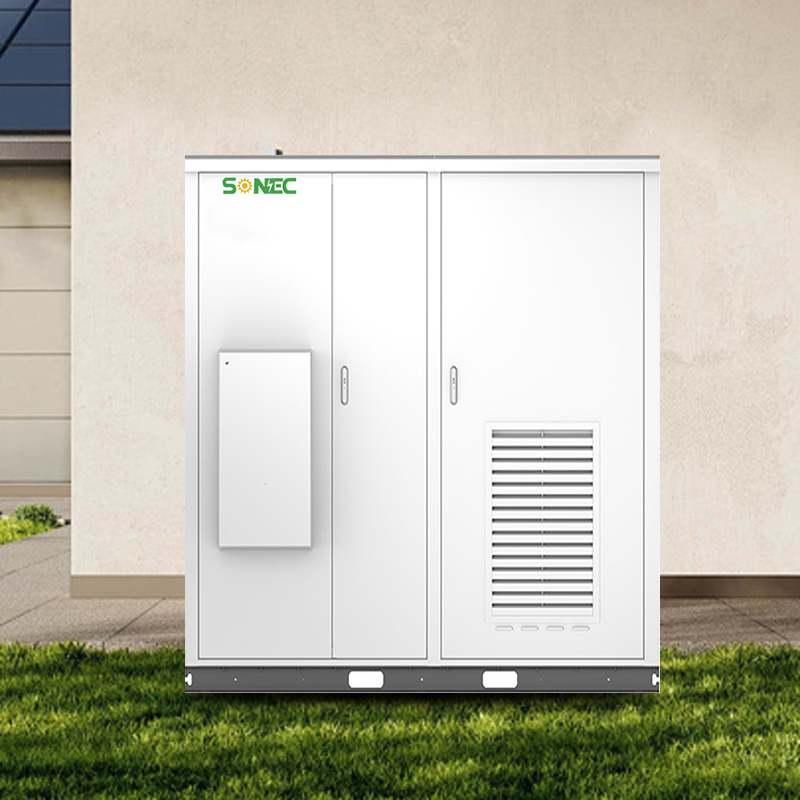
With the rising cost of electricity, industrial ESS is increasingly being deployed as an effective way to reduce power bills and improve energy resilience. Moreover, it is helping businesses comply with strict environmental regulations. The most popular industrial ESS solution is the IES-Tron, an all-in-one system that uses second-life electric vehicle batteries for storing and delivering electricity to businesses. This approach extends battery life, supports a circular economy, and reduces waste. Moreover, the IES-Tron is also highly flexible and customizable for different energy applications. For example, it can be used for ancillary services, microgrids, and off-grid applications. It can also be integrated with solar to create a hybrid generation solution. With growing government incentives for ESS, it is becoming more accessible than ever. As a result, it is expected that the adoption of this innovative technology will continue to grow. With the advent of new battery technologies, including next-generation lithium-ion and solid-state batteries, this is sure to be the case. As such, it’s important that business owners consider the pros and cons of each type of ESS to ensure they select the right one for their energy needs.
Tags:best energy storage system